Seacroft Plasterers for Busy Family Homes
Hard-wearing skims, ceiling repairs and patch plastering for Seacroft's post-war houses, from South Parkway and Kentmere Avenue to the homes round Seacroft Green.
Seacroft · LS14
Post-war Seacroft and how it was built
Seacroft was one of the largest housing developments in post-war Leeds, built out around the old village green that still survives at its heart. Roads such as South Parkway and Kentmere Avenue were laid out with semis, terraces, maisonettes and flats, many using construction methods common in the 1950s and 60s, alongside more traditional brick houses.
Because building methods varied across the estate, interiors vary too. Some houses have brick or block walls with a gypsum backing and finish. Others have partitions in stud or lightweight block, with plasterboard ceilings throughout. Many homes are now privately owned and have been altered over time, so we always check what a wall is made of before deciding how to repair it.
Plastering that stands up to everyday wear
Family homes get knocked about. Hallways, stairs and corners take the most damage, with dents from pushchairs, door handles going through walls and corners chipped back to the bead. We cut out damaged areas, replace corner beads where needed and skim with a hard finish plaster, which gives a tougher surface in high-traffic areas.
Ceilings in Seacroft houses commonly show cracking along the board joints, stains from past leaks or old textured coatings. Joint cracks are cut out, taped and skimmed. Leak-damaged sections are replaced once the leak has been fixed. Any old textured coating gets a sample test first and is then covered by sealing and skimming, or by overboarding. Damp on external walls has to have its cause sorted before plastering.
Plastering without taking over the house
We know families need to keep using the house, so jobs are usually organised one room or one area at a time. Before we start, we sheet the floor, cover furniture, seal doorways and protect the stairs. Dust is kept to the room being worked on, and we clean up at the end of each day so the house is usable.
A visit comes first. We look at the damage, check what the walls and ceilings are made of, and talk about how the room is used. Your written quote explains whether we are patching, skimming or replacing boards, and which finish we will use. If the house is rented from a landlord or housing provider, check with them before booking.
Services
Most asked-for in Seacroft
Skimming & reskimming
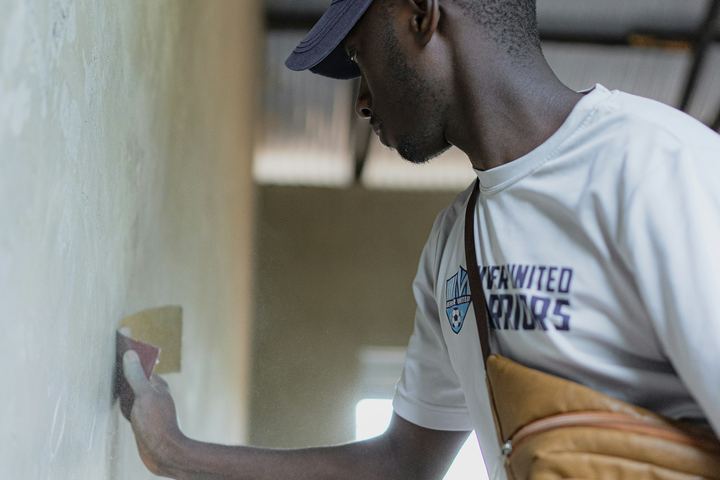
A thin, hard new face on walls and ceilings that are sound underneath but look tired, patched or lumpy.
See the service
Ceiling repairs & replacement
Cracked, sagging, stained or brought down by a leak.
See the servicePatch & crack repairs
Holes left by the electrician, cracks over doorframes, knocked corners and the patch where the old boiler used to be.
See the serviceAlso in Seacroft
Everything else we do
Next door
Areas nearby
FAQs
Plastering in Seacroft: questions
What plaster finish is best for a busy Seacroft hallway?
For hallways and stairs in Seacroft family homes, we often use a hard-wearing finish plaster and new metal corner beads on exposed edges. It gives a tougher surface that resists knocks better than a standard skim.
Can you fix holes where door handles have gone through the wall?
Yes. We cut back the damaged plaster or board to a sound edge, fill or patch it, then skim over so it blends in. Fitting a door stop afterwards is the simplest way to stop it happening again.
How do you find out what my Seacroft walls are made of?
Seacroft houses were built using several construction methods, so we check by tapping, looking at existing openings and sockets, and sometimes a small test. That tells us whether we are working on brick, block or board, and which repair method suits it.
Do I need to empty the room before plastering?
Not entirely. Large furniture can usually be moved to the middle and covered. Small items, pictures and curtains are best taken out. We sheet the floor and protect what stays, and keep the work to one room so the rest of the house remains usable.