Alwoodley Plastering for Large Family Homes
Skimming, ceilings and extension plastering for the big detached houses of Alwoodley, from the closes off Alwoodley Lane to the homes near the golf courses. Clean, flat finishes that suit generous rooms.
Alwoodley · LS17
Detached houses that have grown over the decades
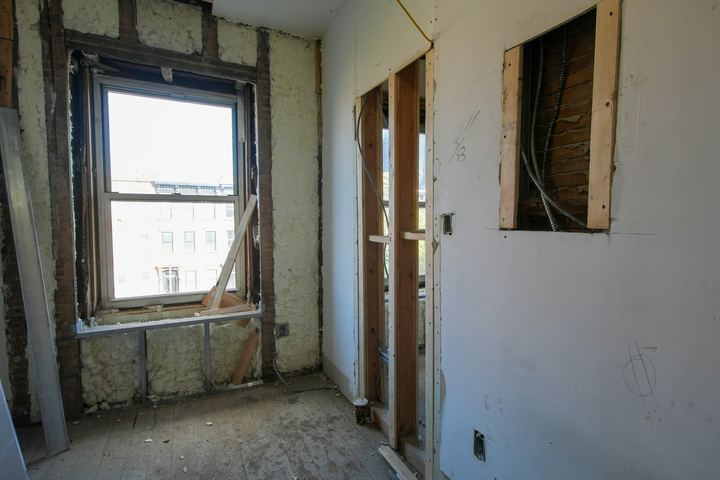
Much of Alwoodley was built as roomy detached housing through the twentieth century, set in decent plots along roads like The Avenue and Sandmoor Drive. Few of those houses look the way they did on day one. Garages have become rooms, kitchens have been pushed out into the garden and loft space has been taken over. Each change leaves a seam where one era of wall meets another, and those seams are where plaster tends to show its age first.
The original walls are usually brick with a gypsum or older sand and cement backing coat, while the additions are often plasterboard on studwork or new blockwork. The two move differently and take a skim differently. Get the preparation wrong and a hairline crack appears along the joint within a season. We treat these junctions as the main job rather than an afterthought, bonding, taping and meshing them properly before any finish coat goes on.
Fixing cracked joins, tired ceilings and old textures
The most common call in Alwoodley is for a run of rooms that need bringing into line with a newer extension. That might mean skimming a lounge and hallway so the walls match the crisp finish next door, or replacing a ceiling that has cracked along its board joints. Large rooms show every ripple when light comes across them from a big window, so we skim in one continuous pass per wall wherever the size allows.
Plenty of houses here still have swirled or stippled ceilings from the 1970s and 1980s. Older textured coatings like that are sample-tested before anyone disturbs them. Once the result is back, the usual route is to seal the surface and skim over it, or to overboard with new plasterboard and skim that. We never sand or scrape textured coatings. Coving can then go back up to frame the room neatly.
How a job in Alwoodley runs from visit to finish
It starts with a visit. We look at every room on the list, check how the walls and ceilings were built, and talk through what you want the house to feel like when it is done. You then get a written quote that sets out the rooms, the method and the preparation involved. Most detached homes here have a drive, which makes unloading boards and mixing outside straightforward, but we confirm the arrangements with you first.
Lived-in homes need careful protection. Floors are sheeted, stair runners covered and doorways screened so dust stays in the room we are working in. On bigger projects, such as a full ground floor after an extension near Wigton Lane, we agree an order of rooms so you keep a kitchen and a quiet space for as long as possible. Fresh plaster then needs time to dry before any paint goes on.
Services
Most asked-for in Alwoodley
Skimming & reskimming
A thin, hard new face on walls and ceilings that are sound underneath but look tired, patched or lumpy.
See the service
Artex covering & removal
Swirls, stipples and peaks made flat again.
See the serviceNew builds & extensions
Board, skim and make good on extensions, loft conversions, garage conversions and full renovations, fitted around your builder and the other trades.
See the serviceAlso in Alwoodley
Everything else we do
Next door
Areas nearby
FAQs
Plastering in Alwoodley: questions
Can you match new plaster in an Alwoodley extension to the rest of the house?
Yes. The aim is for the extension and the original rooms to read as one house. We prepare the junction between old and new walls carefully, then skim both sides to the same smooth finish so there is no visible line once the decorating is done.
Why do cracks keep appearing where my extension meets the old house?
Different materials expand, contract and dry at different rates, so a joint that was simply filled will often open again. We cut back the weak area, bridge it with scrim tape or mesh, and skim across it so the finish has a far better chance of staying sound.
Is it safe to deal with an Artex ceiling in an Alwoodley house?
We do not remove it by sanding or scraping. Older textured coatings are sample-tested first so you know what you are dealing with. In most Alwoodley homes the sensible answer is to seal and skim over the ceiling or overboard it, which leaves a flat finish without disturbing the old surface.
How long should fresh plaster dry before I paint it?
It depends on the thickness, the time of year and how well the room is ventilated. A skim coat in a warm, airy room dries far quicker than a full replaster in winter. Wait until the colour has turned an even pale pink, then use a thinned mist coat first.